
Why Third-Party Inspection is Mandatory for Work at Height in the UAE
Introduction
For work at height operations in the UAE — whether that involves rope access, scaffolding, anchor systems, lifting equipment, or fall protection gear — third-party inspection is not a recommendation, a best practice, or a sign of a particularly safety-conscious company. In numerous specific applications, it is a mandatory legal requirement under UAE federal and emirate-level regulations.
The consequences of getting this wrong are serious: project shutdowns, heavy fines, licence suspensions, and, in the event of an accident, personal criminal liability for the individuals responsible.
This guide explains exactly why third-party inspection is mandatory, which regulations require it, and what categories of work-at-height equipment must be inspected by an independent accredited body.
What is Third-Party Inspection and Why Does Independence Matter?
Third-Party Inspection refers to independent, impartial, and accredited inspection services provided by a neutral organization that is not involved in the design, manufacturing, or purchasing of the product or equipment being evaluated.
It refers to an assessment carried out by an organisation that is:
- Independent of the equipment owner and the equipment manufacturer
- Accredited by a recognised body — in the UAE, this means EIAC (Emirates International Accreditation Centre), ENAS (Emirates National Accreditation System), or holding specific authority approvals such as Dubai Municipality or Abu Dhabi Municipality approval
- Operating under ISO/IEC 17020 — the international standard for inspection bodies, which governs impartiality, technical competence, consistent methodology, and documentation
Independence is critical because it eliminates bias, ensuring that inspection results are based on objective evidence rather than pressure to meet deadlines or financial incentives, which is essential for safety and credibility in industries like oil & gas, construction, and manufacturing.
Specific Categories Where Third-Party Inspection is Mandatory
1. Scaffolding
As noted above, Dubai Municipality explicitly requires third-party inspection for all supported and suspended scaffolds. The third-party inspector must be approved by Dubai Municipality and must issue a formal certificate confirming that the scaffold meets safety standards. This applies to every scaffold on every construction site in Dubai — not just complex or high-rise structures.
2. Lifting Equipment and Lifting Accessories
Lifting equipment used in work at height operations — cranes, hoists, construction hoists, mobile elevated work platforms (MEWPs), and the full range of lifting accessories, including slings, shackles, hooks, eyebolts, and wire ropes — must be inspected and certified by an EIAC-accredited or ENAS-accredited inspection body.
EIAC (Emirates International Accreditation Centre) provides formal accreditation for inspection bodies operating across a wide range of disciplines in the UAE, including lifting equipment, lifting accessories, non-destructive testing, PPE, and fall protection systems. ENAS (Emirates National Accreditation System, under the Ministry of Industry and Advanced Technology) accredits inspection bodies specifically for lifting equipment.
Lifting equipment inspection certificates are only valid when issued by an inspection body holding the relevant EIAC or ENAS accreditation, operating under ISO/IEC 17020 standards.
The certificate issued after a compliant lifting equipment inspection includes the equipment identification, the safe working load, the inspection date, the inspector’s credentials, and the validity period — typically annual, or earlier if the equipment is involved in an incident or undergoes significant modification.
3. Fall Protection Systems — Anchor Points and Lifelines
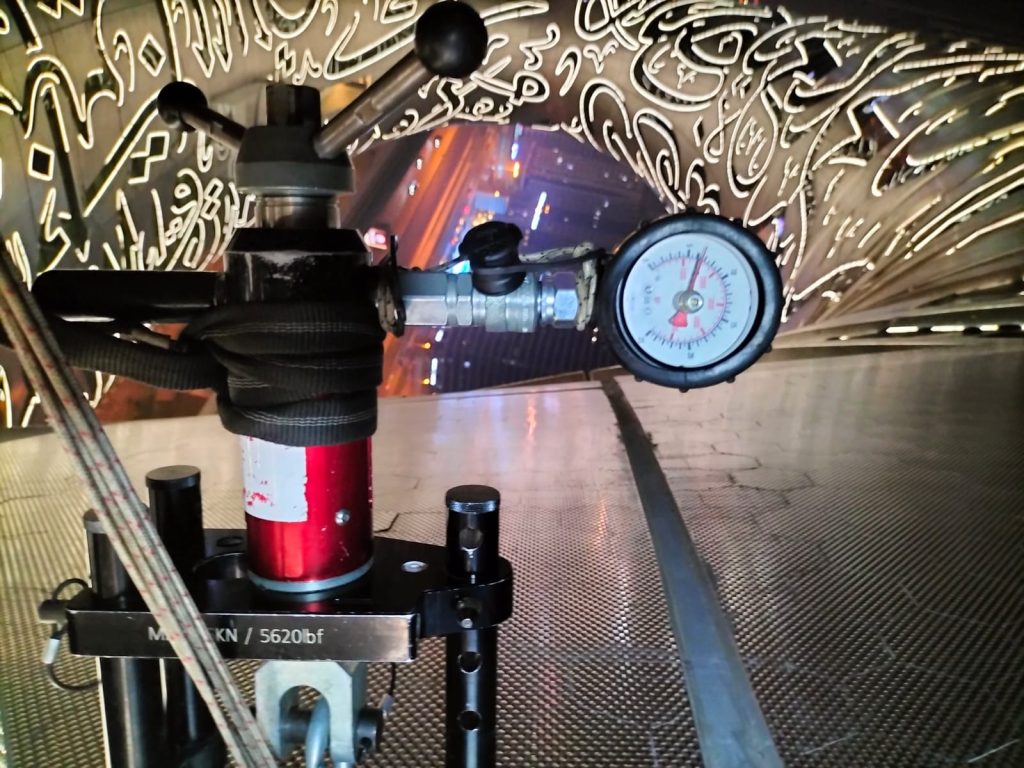
For anchor points installed on buildings to support façade maintenance, window cleaning, or rope access operations, formal third-party inspection and certification are required to verify compliance with applicable standards such as EN 795 and IRATA guidelines. The anchor system shall meet the required load capacity-typically a minimum of 15 kN per anchor point.
4. Personal Protective Equipment for Work at Height
EIAC accreditation covers PPE inspection, which includes the formal inspection and certification of harnesses, lanyards, self-retracting lifelines, and other personal fall arrest components used in work at height operations. While pre-use inspection by the user is required before every use, formal periodic inspection by a competent inspector and the maintenance of documented inspection records are requirements that go beyond what individual workers can provide.
For companies where fall arrest PPE is in regular use — construction contractors, rope access operators, facility maintenance teams — maintaining a structured third-party inspection programme for their PPE inventory is both a regulatory expectation and a basic risk management requirement.
Rope Access Operations – Regular Inspections
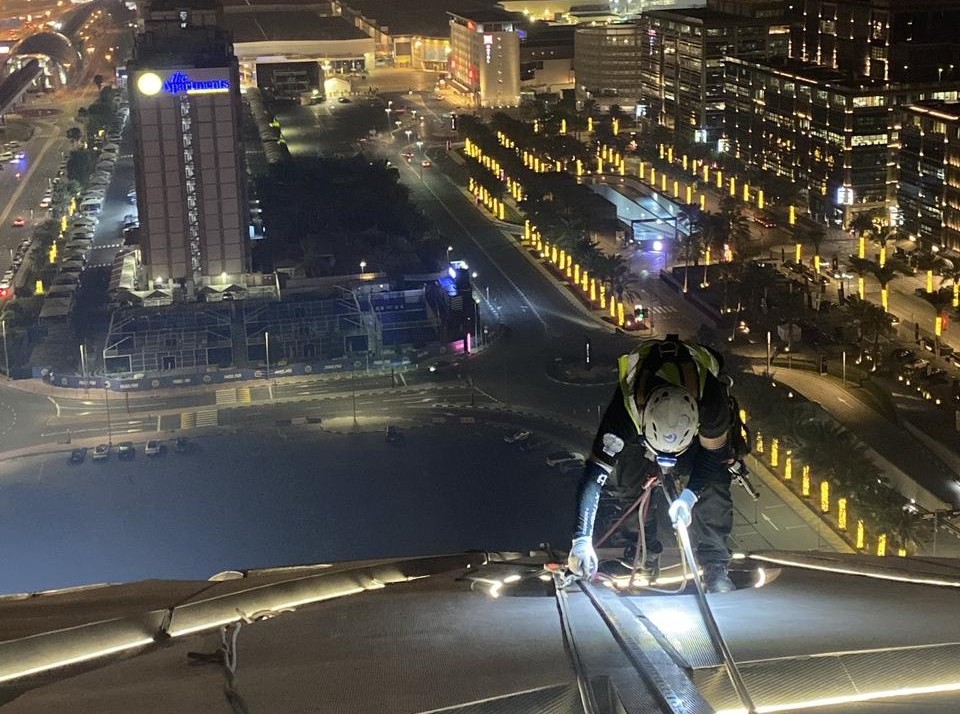
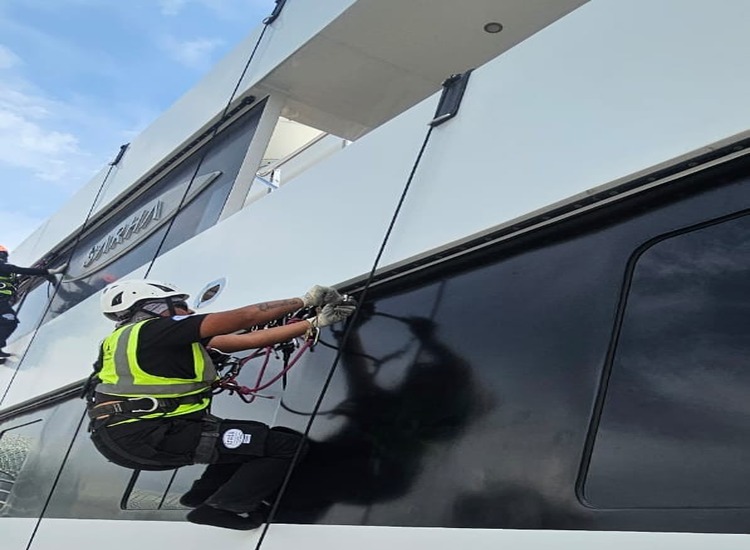
IRATA’s International Code of Practice, which governs all rope access operations conducted by IRATA member companies, requires that all equipment used in rope access operations be inspected, maintained, and documented in accordance with defined standards.
As an IRATA member company, Vertico Xtreme is subject to regular audit of its equipment inspection records, training records, and operational safety standards — the independence and rigour of which reflects the same principles that underpin the UAE regulatory framework’s requirements for third-party inspection.
For clients commissioning rope access work in the UAE, choosing a company with active IRATA membership is one of the most reliable assurances that equipment is being maintained to a standard that will satisfy both IRATA audit requirements and UAE regulatory expectations.
How Vertico Xtreme Delivers Third-Party Inspection in the UAE
Vertico Xtreme is an EIAC Development Member, ISO-certified company, and active IRATA member holding membership as both Operator and Trainer. We provide independent third-party inspection and certification services across a range of work at height applications in Dubai, Abu Dhabi, and the wider GCC.
Our inspection services cover anchor point inspection and load testing, fall protection system certification, fall arrest equipment inspection, lifeline system certification, and lifting equipment inspection — all delivered with formal inspection certificates, photographic records, and clearly documented findings and recommendations.
We conduct load testing for anchor systems and carry out formal EIAC accredited equipment inspection for rope access operations.
We also provide IRATA rope access training course and Work-At-Height course for teams that want to build internal competence in rope access industry and work at height.
Ready to Schedule Your Inspection?
If you have equipment that is due for inspection, systems that have never been formally certified, or a programme that needs to be put on a proper schedule, contact us today for a free initial consultation.