
How Rope Access Training Enhances Career Opportunities in the Construction and Oil & Gas Industries in Dubai & the GCC ?
In recent years, the demand for certified rope access technicians in Dubai and GCC countries has grown rapidly due to the booming construction sector, high-rise developments, and expanding oil & gas operations. As companies across the UAE, Saudi Arabia, Qatar, Oman, Bahrain, and Kuwait prioritize risks management and work effectiveness, rope access training – especially IRATA certification – has become one of the most valuable career boosters for technicians, engineers, constructional industry specialist who are seeking high-paying and globally recognized job opportunities.
This blog explains how rope access training can strengthen your career, what industries are hiring, and why Dubai remains one of the leading hubs for professional rope access certification.
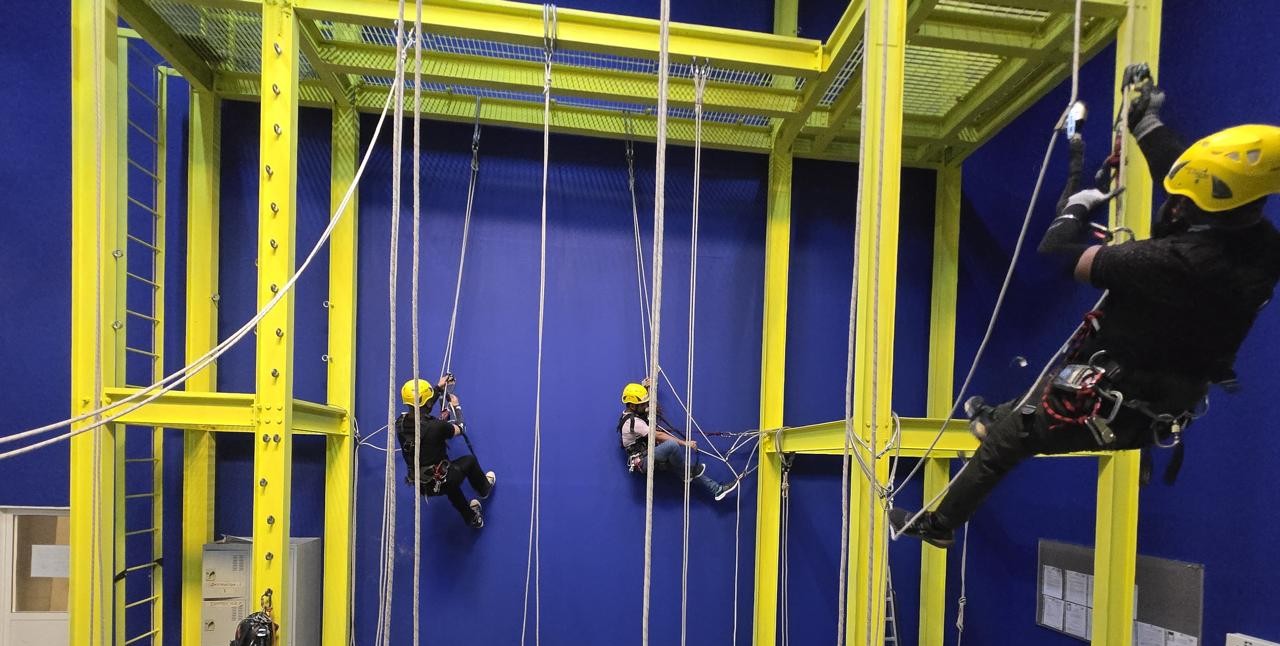
Rising Demand for Rope Access Professionals in Dubai & the GCC
The UAE and GCC have witnessed a surge in large-scale construction, industrial maintenance, Oil & Gas onshore and offshore projects. These sectors require safe access to high-level or difficult-to-reach areas, making rope access a preferred method for inspection, painting, cleaning, maintenance, repairs, etc.
According to recent industry trends in the region:
- High-rise towers in Dubai and Abu Dhabi continue to rely on rope access methods utilization, in contrast to bulky and difficult to maintain Building Maintenance Units.
- Saudi Arabia’s megaprojects (g. Trojena, The Line, Magna, Red Sea, Qiddiya, Aramco) are involving rope access trained specialists more often in recent two years.
- Offshore Platforms and Rigs in KSA, Qatar and Oman increasingly depend on IRATA-certified specialists for structural inspection, NDT works and steelwork rectification.
Why Rope Access is Widely Used in the Construction Industry
The construction sector in the GCC is dominated by skyscrapers, towers, and complex structures where traditional scaffolding, BMU, cradles and MEWPs are costly and time-consuming. Rope access provides:
- Faster access to high-level areas, faster setup and demobilization.
- Reduced scaffolding, plant equipment and logistics costs and environmental impact
- No visual or physical obstruction. Minimal disruption to business operations.
- Better maneuverability for difficult access locations, superior reach and no ground or façade dependency.
- Flexibility and multi-discipline capability. Rope access allows integration of multiple activities in one mobilization, division on teams and sub-teams which can be distributed among areas open for access and between listed in the scope of work tasks.
- High safety standards under IRATA/ISO frameworks
Rope access is used extensively for:
- Façade and structures conditional survey and inspection
- External and internal cleaning of any surface utilizing wiping, water pressure, pure water system and dusting methods.
- Façade glazing and cladding installation and/or replacement.
- Surfaces refurbishment and restoration, painting and coating.
- Insulation and waterproofing.
- High-level maintenance of mechanisms and structural elements.
Rope Access in the Oil & Gas Sector: A High-Paying Career Path
The oil & gas industry across the GCC (UAE, KSA, Qatar, Oman, Kuwait) is one of the biggest employers of rope access specialist. Offshore platforms and refineries rely heavily on trained professionals for:
- NDT inspection (VT, UT, MT, PT, RT, ET & ACFM)
- Rigging and lifting operations support
- Welding and fabrication at height
- Pipeline inspection
- Painting and corrosion control
Because these environments involve higher risks, requires higher qualification and situated remotely – offshore rope access jobs often offer significantly higher salaries and benefits.
How IRATA Certification Boosts and Benefits Your Career
IRATA (Industrial Rope Access Trade Association) is non-commercial organization which constantly develops the world’s leading safety standard for rope access industry.
Completing IRATA training and getting Level 1, and in further Level 2, or Level 3 certification you will be able to deliver your services and apply your professional skills at high-level and hard-to-reach areas.
IRATA certification is:
- Recognized globally across all industries
- Required by major contractors in Dubai, Abu Dhabi, Saudi Arabia, and Qatar
- Increases employability for onshore and offshore projects
- Provides career progression
- Ensures specialists working on ropes follow the highest safety standards
To summarize, employers and contractors across the GCC require IRATA-qualified specialists because it guarantees professionalism and compliance with safety standards.
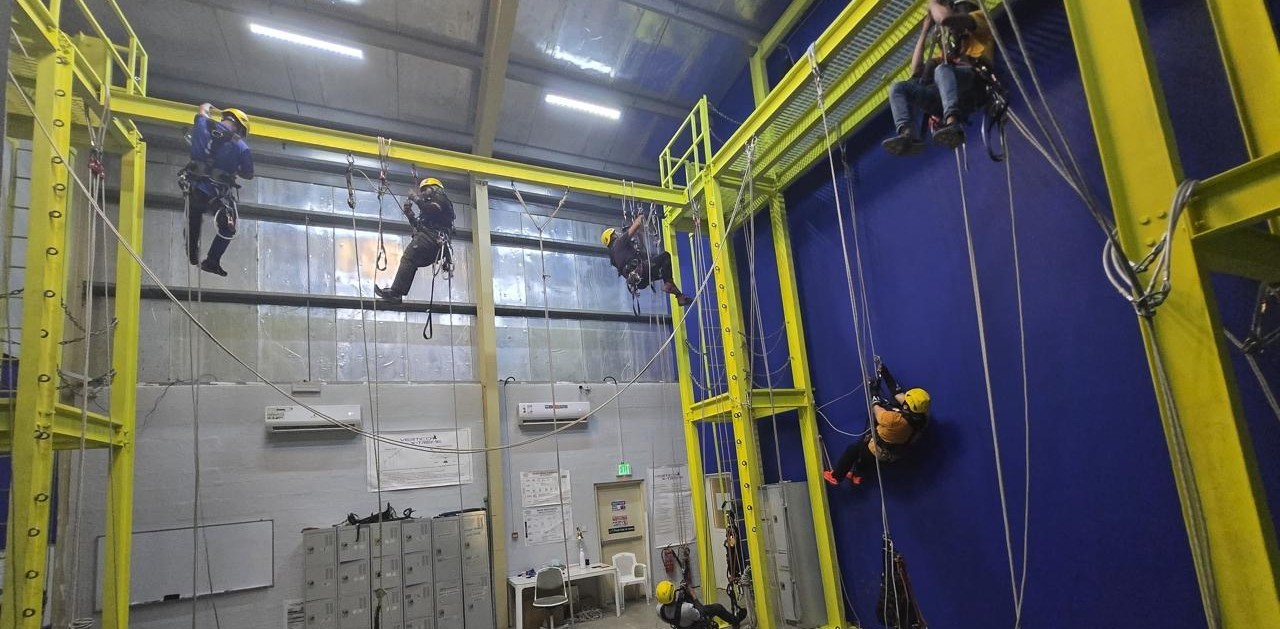
Skills You Gain Through Rope Access Training
A certified rope access technician gains a wide set of technical and safety skills, depending on the Level of the training course, including but not limited by:
- Rope maneuvers and safe work positioning
- Rope access rigging and equipment setup
- Fall protection techniques
- High-risk environment safety assurance
- Rescue planning and emergency response
- Worksite hazard identification and risk assessment
- Works method statement development
These skills prepare you for demanding roles in both construction and oil & gas industries. Offshore specialists and NDT-certified rope access professionals typically earn higher salaries, with additional benefits such as:
- Offshore allowances
- High quality food and accommodation
- Comfortable rotational schedules
- Fair bonuses for high-risk tasks performance
Why Dubai is the Top Hub for Rope Access Training ?
Dubai is considered one of the best locations for rope access training because of:
- Big choice of Accredited IRATA training centers
- Availability of world-class facilities and high concentration of instructors.
- High demand for rope access jobs in the city and diverse industry exposure.
- Stable regulations and strong safety culture
- Easy access for trainees across Middle East and South-Eastern Asia.
Moreover, Dubai’s strict safety regulations and high volume of construction projects create continuous opportunities for qualified specialists.
Industries Hiring Rope Access Specialists in the GCC
Rope access specialists are needed in various sectors:
- Civil and Industrial Construction
- Civil buildings and structures cleaning
- Glass and cladding installation / replacement
- High-rise maintenance of mechanisms and structural elements.
- Offshore steelwork maintenance, including NDT inspections, weld repairs, painting and corrosion control.
- Infrastructure & Power Plants
- Renewable energy
- Industrial plants
- Marine & Shipyards
How to Start a Career in Rope Access (Step-by-Step)
- Enroll in an IRATA Level 1 course at an accredited UAE or GCC training center.
- Complete the 6-day training including practical and theory assessments.
- Log your hours on real projects.
- Upgrade to higher levels for advanced roles and supervisory.
- Apply to companies in UAE, Saudi Arabia, Qatar, and Oman where demand is high.
Conclusion: A Fast-Growing, High-Demand Career
Rope access is one of the fastest-growing career paths in the GCC, offering excellent salaries, international recognition, and opportunities in major industries like construction and oil & gas. With IRATA training and the right skills, specialists can secure stable, well-paid, and future-proof roles across Dubai and the wider Middle East.
For those ready to start or advance their journey, Vertico Xtreme offers accredited IRATA rope access training delivered by experienced instructors, ensuring every trainee meets international safety and competency standards. Whether you’re aiming for Level 1 entry, upgrading to Level 2, or stepping into a supervisory Level 3 role, Vertico Xtreme provides hands-on training, real-world simulation, and expert guidance needed to build or continue a successful career in the rope access industry.
Get Full Course Details & Fees – Submit Your Enquiry
Fill up the contact form below to get complete information about course modules, fees, training schedule, and certification.